Loyalty builds fast with a delivery-only model, too. In their first month on DoorDash, new merchants receive over 20% of orders from repeat consumers, rising to nearly 40% by month three (internal DoorDash data, Jan 2025–Dec 2025).
Three terms you need to know:
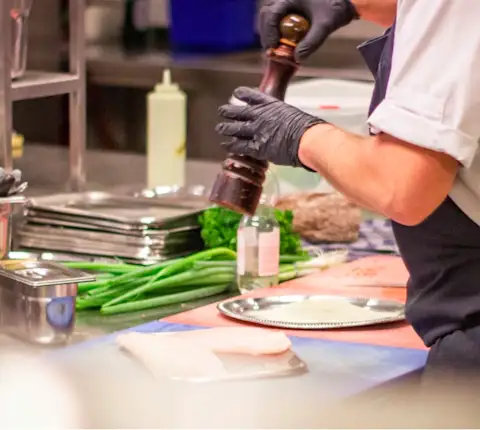
Ghost kitchen: a standalone commercial kitchen with no storefront, built for delivery and pickup, sometimes called a dark kitchen.
Virtual restaurant: a delivery-only brand run from an existing restaurant's kitchen, often referred to as a virtual kitchen
Cloud kitchen: a shared, tech-enabled facility housing multiple operators.
Note, these terms are often used interchangeably in practice.
We'll cover how the model works, what it costs to start, the pros and cons, and how to turn delivery orders into lasting profit.
Let's start with the basics.
What Are Delivery Only Restaurants?
A delivery-only restaurant is one that runs without a dine-in space. You cook, package, and hand off orders for delivery and pickup, with no tables, no servers, and no front-of-house to staff.
Ghost kitchens, virtual restaurants, and cloud kitchens all fall into the delivery-only category. Each relies on digital platforms for reach. Customers find you on apps and order through them, with third parties like DoorDash Marketplace encouraging discovery. Your listing does the work a storefront would: photos, menu, reviews, and ratings.
Delivery-only concepts took off during the pandemic of 2020, when dine-in slowed, and restaurant operators wanted lower-cost ways to reach customers. Six years later, demand continues to climb, and low overhead costs make it an easy path to test a concept or expand without a second lease.
How Does the Delivery Only Restaurant Model Work?
With no tables to turn, the whole operation runs on a single loop: an order comes in, the kitchen makes it, a delivery driver takes it. Here's how that plays out on both sides.
The End-to-End Delivery-Only Workflow
The customer experience starts in an app. A hungry potential diner opens DoorDash, browses nearby spots, chooses what they want to eat, and pays. Then, they track the order in real time until the Dasher arrives.
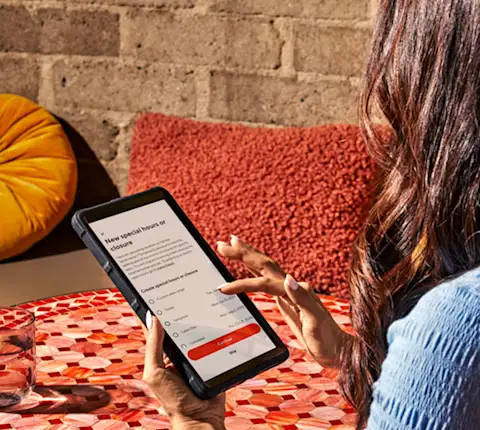
On your side, a new order pings your tablet or POS the moment it lands. Your team cooks it, packs it for transit, and stages it for pickup. A Dasher grabs the bag and handles delivery through the DoorDash platform. You never answer a phone or run a register.
Every dollar and every minute goes toward kitchen speed and food quality. DoorDash provides a tablet to start, or integrates with 30+ POS providers so online orders flow straight into your existing system.
Ghost Kitchens vs. Virtual Restaurants: What's the Difference?
A ghost kitchen needs a dedicated kitchen space. A virtual restaurant, or a virtual kitchen, uses what's already in place, which makes it a low-cost way to test a new concept without taking on new overhead.
How to Start a Delivery Only Restaurant: Step-by-Step Guide
Launching a delivery-only restaurant takes fewer moving parts than opening a physical location, but the steps still build on each other.
Here's the order to work through them.
Step 1: Plan Your Restaurant Concept and Target Market
Start with what you'll sell and who you'll sell it to. Pick a concept that fills a gap nearby, whether that's wings, bowls, or a breakfast burrito locals can't find anywhere else.
Research demand and the demographics around your delivery zone, then choose your model: a ghost kitchen if you're building from scratch, or a virtual restaurant if you already run a kitchen with open capacity.
Set clear goals up front, like target order volume or profit margins.
Step 2: Create a Delivery-Optimized Menu
Since you’re not opening a brick and mortar spot, your menu is your whole storefront. Build it for the road — literally. Favor items that hold up in a delivery bag and cut anything that arrives soggy or cold. Keep it tight, around 15 to 25 menu items, so your kitchen moves fast and quality holds steady.
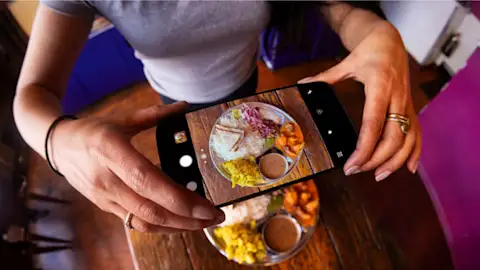
Don’t forget to write for the screen: 93% of consumers say item descriptions influence what they order, and 87% say photos do, according to DoorDash’s 2026 Trends Report.
Strong descriptions and clear photos do the selling a server normally would.
Step 3: Develop Your Brand Identity
Without a dining room or signage, your brand lives through digital touchpoints: your listing, your packaging, and your social media. Choose a name that's easy to spell and easy to find, since customers will look for it on apps and search engines. Invest in a clean logo and packaging that looks good on arrival.
Keep the look consistent everywhere a customer sees you, so instead of ordering once, they become loyal to your restaurant brand.
Step 4: Secure Kitchen Space (Ghost Kitchen, Shared Kitchen, or Your Own)
Here are three solid ways to find kitchen space:
Rent in a ghost kitchen or shared commercial kitchen, so you can avoid the time and costs that come with a big buildout.
Build your own commercial kitchen for full control over layout and equipment.
Use an existing restaurant kitchen to run a virtual brand during open hours.
Weigh each on location, cost, and the equipment your menu needs.
A spot near dense delivery demand shortens delivery times and ensures food is still hot upon arrival.
Step 5: Obtain Licenses and Permits
A delivery-only restaurant needs the same licenses as any restaurant business, including:
Business license
Food service permit
Health department approval
Food handler certifications for staff
Check your local regulations early, since requirements vary by city and county.
Approvals can take four to eight weeks, so start the paperwork before you plan to open.
Step 6: Choose Your Delivery Service Partners
Most delivery-only restaurants list on two to four platforms to widen their reach. DoorDash is the largest delivery service in North America, available in over 18,000 cities (DoorDash, 2025 U.S. Economic Impact Report), and partners like Uber Eats and Grubhub can add incremental orders.
When comparing your options, consider: how many customers they reach in your area, their commission fees, how cleanly they integrate with your systems, and the support they offer.
Step 7: Set Up POS and Kitchen Management Systems
A POS, or point-of-sale system, is the software that takes payments and routes orders to your kitchen. Pick one that connects directly to your delivery platforms, so every order lands in one place instead of across a separate tablet for each app.
Step 8: Hire and Train Your Team
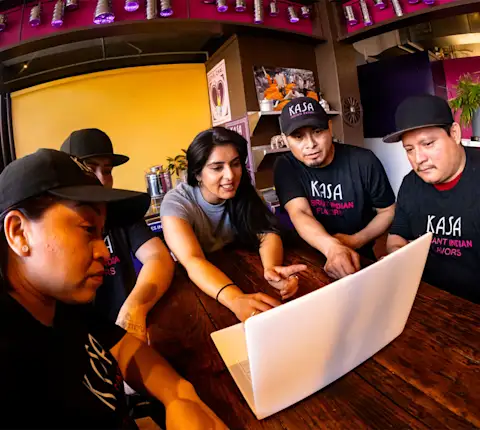
Delivery-only is a lean operation. Many restaurant owners need just a small kitchen crew and a manager. Train everyone on the delivery side of the job: reading incoming tickets, packing orders well, and holding speed and consistency high when tickets stack up.
A well-trained team protects your ratings, since customers judge each order on how it shows up.
Step 9: Launch and Optimize Your Marketplace Presence
When you go live, fill out your DoorDash Marketplace listing completely: every item should have a clear description and a high-quality photo. Adding descriptions can lift sales by about 6%, and adding photos can lift sales by about 13% (DoorDash 2026 Trends Report).
Lean on DoorDash's built-in AI tools to speed up the listing work, then track performance in the Merchant Portal and adjust whatever isn't selling.
Step 10: Develop a Marketing and Customer Retention Strategy
Winning a customer once is good; bringing them back improves your profit margins. A few ways to build repeat orders:
Reach DashPass members. DashPass is a subscription customers pay for to unlock $0 delivery fees, and members tend to order two to three times more often than non-members.
Use Cross-Channel Loyalty to convert app customers into repeat orders.
Respond to reviews so customers consider you a restaurant that listens.
Run Promotions during slow windows to fill quiet hours instead of discounting demand you already have.

The Challenges of Running a Delivery Only Restaurant (And How to Overcome Them)
Every upside comes with a few hurdles. Here are four common ones, and how to handle each.
Limited Brand Visibility Without a Storefront
No sign on a busy street, no window display, no walk-by customers. People find you only if they're already scrolling a delivery app, so your ranking and reviews are doubly important. Climb the rankings by keeping prep times tight, ratings high, and your menu fully built out.
Over time, build a channel you own, so the app isn't your only path to customers.
High Competition on Delivery Marketplaces
Delivery marketplaces are crowded, and every nearby restaurant is one tap away from yours. Sharpen what sets you apart, whether that's a dish nobody else delivers or consistency people learn to trust.
DoorDash tools help, too: Sponsored Listings set your restaurant in front of more customers, and Promotions give first-timers a reason to choose you.
Dependence on Third-Party Platform Performance
When most of your orders run through one app, its reach and uptime directly affect your income. Spread the risk. List on more than one platform, and open a direct ordering channel through your own website, so the business doesn't ride on third-party delivery services only.
Managing Food Quality During Transit
A dish that's perfect at the pass can arrive soggy twenty minutes later. Packaging is your main defense: choose containers that hold heat and keep textures intact, and vent anything that steams.
Order from your restaurant as if you were a customer and check what lands at the door. What survives the trip protects your ratings; what doesn't, belongs off the menu.
None of these are dealbreakers, but each one compounds if ignored. With the challenges accounted for, the next priority is profitability.
Is delivery viable for your concept? Run this check first.
Before optimizing, confirm the math works for your menu and price point.
Start with your average order value. Multiply it by your food margin — what's left after ingredient costs. Then subtract the platform commission and your per-order packaging cost. The result is your contribution per order: what each delivery order actually puts toward your fixed costs.
Here's the formula:
(Average order value × food margin %) − platform commission − packaging cost = contribution per order
If that number is positive, delivery adds value to your business. If it's negative, volume alone won't fix it — you'll need to raise prices, cut low-margin items, or reduce packaging costs before scaling orders.
The good news for delivery-only operators: fixed overhead is typically lower than that of a traditional restaurant, so the threshold you need to clear is smaller. That's what makes the model work for so many concepts.
How to Maximize Profitability for Your Delivery Only Restaurant
Once orders come in steadily, profitability comes down to three disciplines:
Pricing
Reading your own data
Controlling per-order costs
Optimize Menu Pricing for Delivery Economics
Each delivery order has to absorb commission and packaging costs first. Calculate true margin per item after all fees, then use Merchant Portal data to find your strongest performers. Those deserve prime placement and top-level photography.
Move prices in small increments. Watch order volume respond before you commit to a cost change, rather than repricing the whole menu at once.
Use Data to Identify Your Best-Selling Items
Merchant Portal reporting shows when your orders land, down to the day and daypart. Schedule staff and prep against that demand and lean into the items that sell, removing unpopular dishes completely.
Time your Promotions the same way: offer them during slow windows to fill gaps, not at peaks where customers are willing to pay full price.
Reduce Delivery Commission Costs With Direct Channels
Marketplace brings you new customers. Direct channels are how you keep the repeat ones at a lower cost per order. DoorDash Commerce Platform gives you a direct ordering channel — a Storefront on your own website or a branded app. There's no commission on direct orders; you pay a payment processing fee per order, plus a monthly plan fee depending on the tier you choose. Visit the DoorDash Commerce Platform pricing page for current rates.
Cross-Channel Loyalty connects the two. When a customer earns points on a Marketplace order, they’re prompted to opt into your loyalty program to claim a reward. At that point, they share their contact details with you directly, and you can market to them through channels you own.
Over time, your repeat business shifts toward direct, while Marketplace keeps doing what it does best: putting your restaurant in front of new customers.
Grow Your Delivery Only Restaurant with DoorDash Marketplace
DoorDash gives delivery-only restaurants the reach and the tools to grow, whether you run a ghost kitchen or a virtual brand out of an existing one.
List on Marketplace to put your food in front of millions of customers across 7,000+ cities, with 30+ POS integrations, AI-powered listing tools, and Merchant Portal reporting to run the operation. Add DashPass and Cross-Channel Loyalty to turn first-time orders into repeat business, then build direct sales through DoorDash Commerce Platform.
Two paths, one partnership: Marketplace to find new customers, your own channels to keep them.